A workplace and a security posture
Grade-A office space in the right city, device and identity management that satisfies your security review, and a local helpdesk in the team’s own time zone.
Two problems that look like one
Workplace and IT are usually treated as a single facilities task. They are not. One is a property and operations question, the other decides whether your security team signs off.
Grade-A workspace
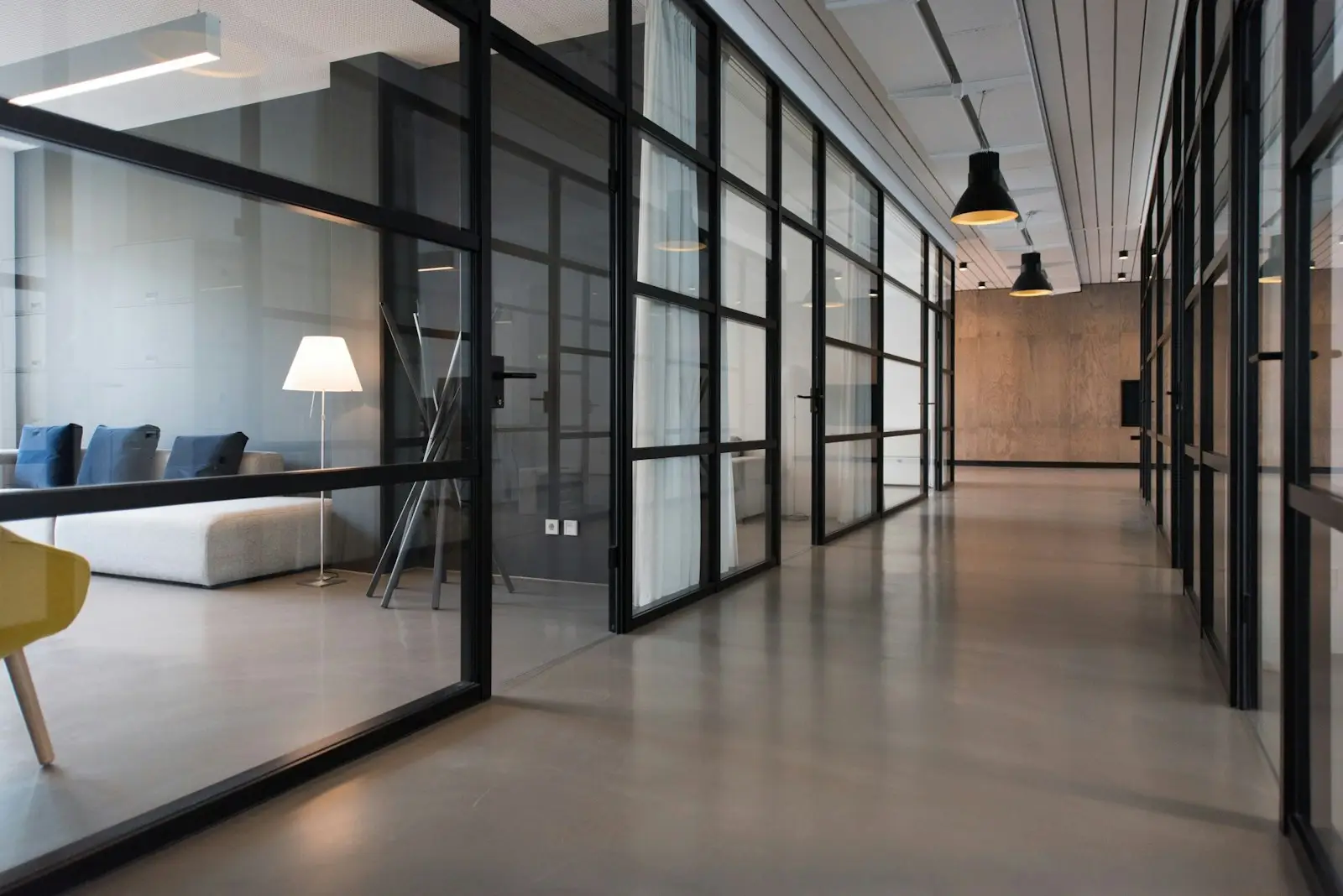
Real office space with reliable power, backup, connectivity and the meeting rooms a distributed team actually needs. Location within the city matters more than the headline rent, because commute time drives attrition.
Secure cloud access
Access to your existing cloud estate through your identity provider, your conditional access rules and your network controls. No parallel environment, and no shared credentials.
Device and endpoint management
Company owned devices, enrolled in your MDM, with disk encryption, patch policy and remote wipe. This is the control auditors ask about first and the one most commonly missing.
Identity and access
Single sign on, multi factor authentication and role based access provisioned through your existing directory, so joiners and leavers are handled by your process rather than a local spreadsheet.
Local IT helpdesk
Support in the team’s own working hours. An engineer blocked at 10am in Bengaluru should not wait for someone in California to wake up.
Evidence and audit readiness
Asset registers, access reviews and policy acknowledgements maintained continuously, so a customer security questionnaire is answered from records rather than reconstructed.

One estate, extended
The objective is not to build a separate IT environment in India. It is to extend the one you already have, under the same controls, so that your India engineers are inside your perimeter rather than adjacent to it.
That means your identity provider, your device management, your VPN or zero trust policy and your logging. It is a materially better security position than a vendor arrangement, where engineers typically work on vendor managed hardware under vendor policy, and you inherit whatever that turns out to be.
It also simplifies the questions you get asked. When a customer’s security team asks who has access to their data and on what device, the answer is your employees on your managed hardware under your policy, which is a short answer rather than a diagram.
Owned setup, managed office, or vendor premises
| Dimension | Owned setup (Nano GCC) | Managed office / coworking | Vendor premises |
|---|---|---|---|
| Who controls the devices | You | You | The vendor |
| Identity and access provider | Yours | Yours | Theirs |
| Physical access control | Yours to define | Shared building | Theirs |
| Answer to a customer security review | Direct | Direct | Depends on vendor |
| Cost at 10 people | Higher | Lowest | Bundled |
| Cost at 50 people | Lowest | Rises steeply | Bundled, opaque |
| Setup time | 6 to 10 weeks | 1 to 2 weeks | Immediate |
| Suitable for regulated data | Yes | Case by case | Rarely without work |
Workplace and IT spend in the first year
The proportions shift quickly. Fit out is a one time cost, while people and connectivity are permanent.
How it is delivered
City and location decided
City selected against talent availability, cost and your existing footprint, then a location within it chosen against commute patterns rather than headline rent.
Security model agreed
Identity, device management, network access and logging designed with your security team before anything is procured. Retrofitting these after the team starts is considerably harder.
Space secured and fitted
Lease or managed space contracted, fit out completed, connectivity with genuine redundancy installed, and power backup provisioned. Power and connectivity redundancy are not optional in most Indian cities.
Devices and access provisioned
Company owned hardware procured, enrolled in your MDM, and access provisioned through your directory ahead of each start date rather than on it.
Support and evidence
Local helpdesk in the team’s hours, asset register maintained, and access reviews run on a schedule so audit evidence exists continuously.
What an owned setup gives you
One security perimeter
Your India engineers are inside the estate you already control rather than in a parallel environment you have to assess separately.
Security reviews get shorter
Customer questionnaires are answered from your own asset register and access logs, not by asking a vendor and waiting.
Support matches the working day
Problems are resolved in the hours the team actually works, which sounds small and is one of the more visible day to day differences.
Cost per head falls with scale
Fixed workplace costs spread across a larger team, which is the opposite of the coworking curve.

A workplace, and the evidence your auditors will ask for
The workplace is the visible half. The half that takes longer is the control environment that lets your security team approve production access.
- City and location recommendation tested against talent depth, cost and commute patterns
- Grade-A space secured, fitted out, with redundant power and two connectivity providers
- Company owned devices procured and enrolled in your mobile device management
- Disk encryption, patch policy and remote wipe enforced through your existing tooling
- Single sign on, multi factor authentication and role based access through your directory
- Joiner and leaver process wired into your existing offboarding, with device return tracked
- Local IT helpdesk operating in the team’s working hours, with escalation paths defined
- Asset register and scheduled access reviews maintained so audit evidence exists continuously
When an owned setup is right, and when managed space wins
A good fit when
You are above roughly twenty people, you handle customer or regulated data, or your customers run security reviews that ask specific questions about device control and access. The cost per head also falls with scale, so larger teams benefit twice.
A poor fit when
You are under ten people or your headcount plan is genuinely uncertain. Leases run three to five years with lock in periods. Managed space is cheaper, faster and easy to exit, and taking a lease too early is a common way to fix cost before the model is proven.
One honest caveat. An owned office is the right answer above roughly twenty people and rarely below ten. Below that, managed space is cheaper, faster and easier to exit, and taking on a lease early is one of the more common ways teams lock in cost before they have proven the model. We will recommend managed space when that is the honest answer.
Frequently asked questions
Which Indian city should we choose?
It depends on the roles. Bengaluru has the deepest senior engineering pool and the highest cost and attrition. Hyderabad is strong and somewhat calmer. Chennai is strong in embedded, platform and enterprise engineering. Visakhapatnam and Coimbatore offer materially lower cost and attrition with a smaller senior pool. We recommend against defaulting to Bengaluru without testing the alternatives.
Do we need our own office from the start?
Usually not. Managed space is the sensible choice for the first ten to twenty people because it is faster, cheaper and easy to exit. The move to an owned lease should follow proof that the model works, not precede it.
How is our source code and customer data protected?
Through your existing controls extended to India rather than new ones invented there. Company owned devices in your MDM with disk encryption, access through your identity provider with multi factor authentication, and your existing network and logging policy. The engineers are your employees, so your acceptable use policy applies directly.
Is power and internet reliability actually a problem?
It is a solved problem in Grade-A buildings in the major technology cities, but only because those buildings invest in redundancy. Backup power and a second internet provider are standard requirements we specify rather than optional extras, and they are a real line in the budget.
Can the India team access production systems?
That is your decision and your policy, applied to your own employees. Many teams grant the same production access their engineers elsewhere have, because the people are employed on the same basis under the same controls. This is a structural difference from a vendor arrangement, where production access is usually far harder to justify.
What IT support do you provide locally?
A local helpdesk operating in the team’s working hours, handling device issues, access requests, connectivity and onboarding. Escalation paths into your own IT function are defined so ownership is never ambiguous.
How do you handle joiners and leavers?
Through your existing directory and offboarding process, so access is provisioned before a start date and revoked on the last day. Device return and wipe are tracked in the asset register, which is what an auditor asks to see.
What happens to the office if we scale down?
This is precisely why we recommend managed space early. A lease typically runs three to five years with a lock in period, so the flexibility question should be answered before signing rather than after. If your headcount plan is uncertain, managed space is the correct answer for longer than most companies assume.
Related reading
Get a workplace and security plan
Tell us the team size you are planning for and the controls your security team requires. We will come back with a city recommendation, a workplace option, a security model and a fully loaded cost.